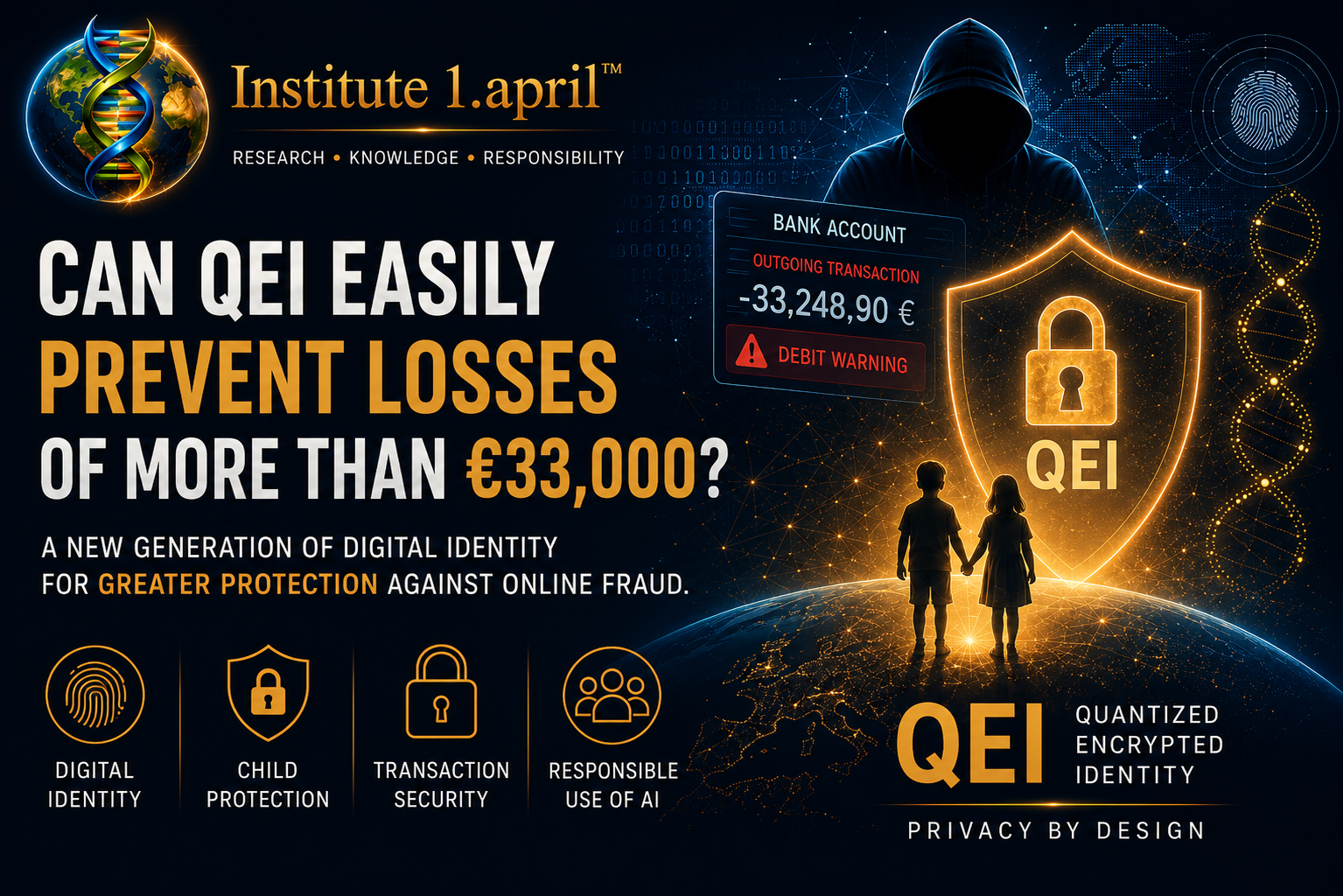
At the Institute 1 April, we believe that the future does not lie in an ever-growing number of passwords, SMS codes, or phone confirmations, but in a new generation of digital identity.
A recently reported online fraud case, in which a victim lost more than €33,000, once again raises the question of whether today’s digital identity and online authentication systems provide sufficient protection. Source.
At the Institute 1 April, we believe that the future does not lie in an increasing reliance on passwords, SMS codes, or telephone confirmations, but in a new generation of digital identity, where the user remains the sole true owner of their identity.
“The best protection is not a warning after fraud has occurred, but a system that prevents fraud from happening in the first place.”
— Institute 1 April
How Could the QEI System Help?
QEI (Quantized Encrypted Identity) is based on multiple independent security factors that are verified locally on the user’s device.
This means that:
✔ a stolen password alone would not be sufficient,
✔ a fraudulent phone call would not grant access,
✔ a stolen SMS verification code alone would not authorize a transaction,
✔ confirmation would require the verified digital identity of the legitimate user,
✔ biometric data would never leave the user’s device and would not be stored in a centralized database.
The goal is no longer to warn users after damage has occurred.
The goal is to prevent the damage from occurring in the first place.
Every successful online fraud case serves as a reminder that current systems are not sufficiently resilient against modern forms of social engineering and digital identity theft. Similar online fraud incidents are increasing in Slovenia, causing losses amounting to millions of euros. Article; Article.
Through the QEI initiative, the Institute 1 April seeks to encourage a professional discussion about the future of secure digital identity and to explore solutions that can better protect citizens, their personal data, and their assets.
Join the public discussion and help shape a safer digital future.