Child protection in the age of artificial intelligence: Do we need a new generation of digital identity?
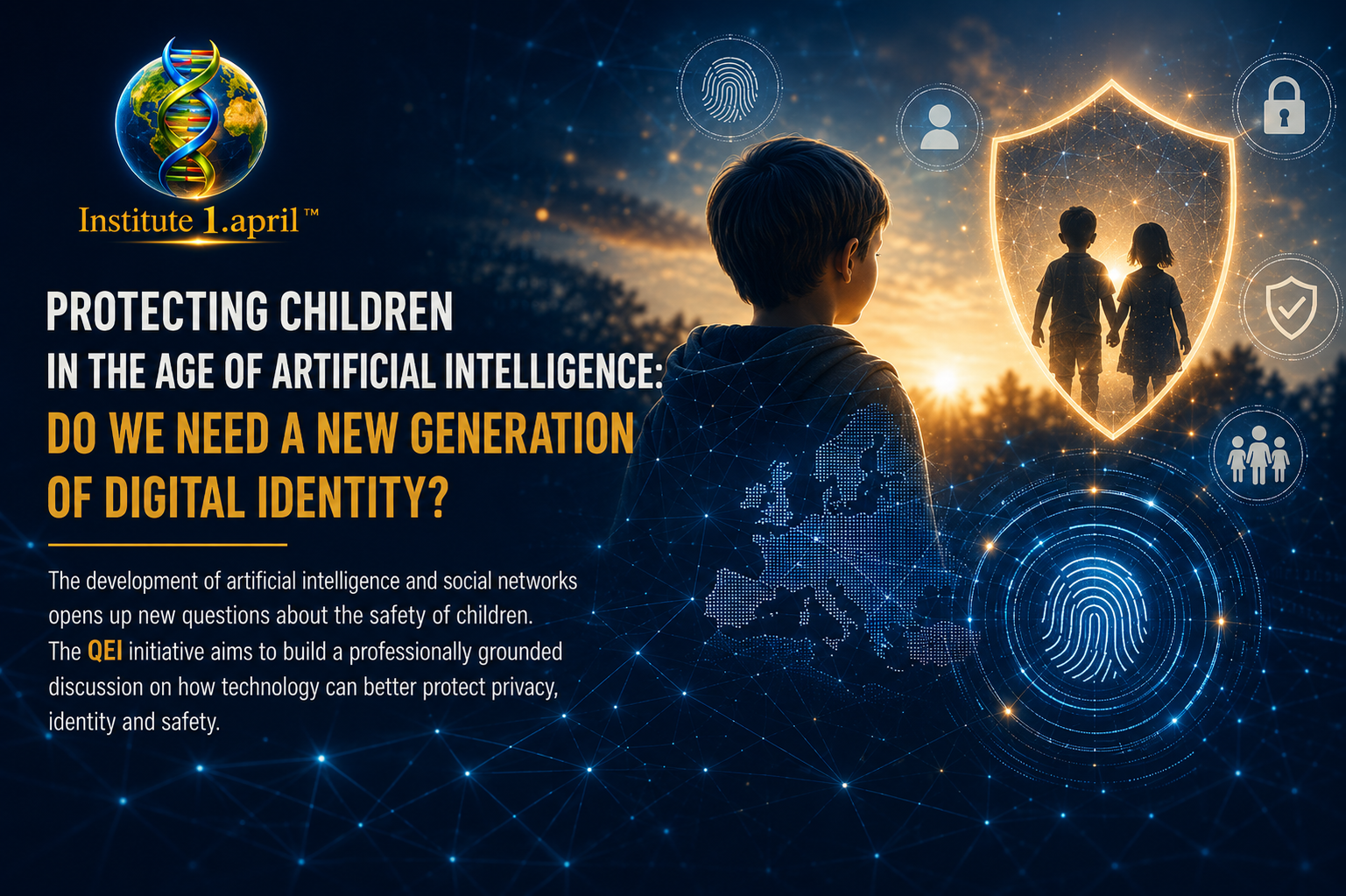
The development of artificial intelligence and social media is raising new questions about child safety.
The QEI initiative aims to encourage a professional discussion on how future technologies could better protect the privacy, identity, and safety of children.
Recent media discussions about children’s privacy (article) on social media have once again highlighted one of the most important issues of the modern digital society—how to protect children in a world where their digital identity begins to form from birth.
Parents often share photos and videos of their children with the best intentions. However, such posts can create a permanent digital footprint that remains online for years and can be copied, analyzed, or misused in ways that no one could have anticipated when the content was originally shared.
At the same time, another phenomenon is rapidly emerging as an increasingly significant challenge—artificial intelligence.
AI is Changing the Rules of the Game
Today’s AI tools make it possible to alter photographs and videos with remarkable realism. Within moments, it is possible to create an image that makes a person appear older or younger, modify facial features, or generate highly convincing synthetic media.
This means that traditional methods of age verification based solely on facial photographs or a declared date of birth may no longer be sufficiently reliable in the long term.
Platforms such as Facebook, Instagram, Snapchat, TikTok, and other digital services will likely need to develop new approaches to verifying users’ ages while maintaining a high level of privacy protection.
“The technology of the future will not be judged by what it can do, but by how well it protects the most vulnerable.”
— Institute 1 April
Technology Must Protect People
For this reason, the Institute 1 April has introduced the public QEI (Quantized Encrypted Identity) initiative. Its purpose is not to present a final solution, but to open a professional discussion about the future of digital identity.
The core idea behind the initiative is simple: identity verification should become more secure while requiring the collection of as little sensitive personal information as possible.
The proposed concept is based on the use of cryptographically protected identity records instead of storing raw biometric data in centralized databases. Such an approach could reduce the risk of identity theft, unauthorized access to personal information, and large-scale misuse.
How Could QEI Contribute?
If the concept were further developed, independently validated, and supported by an appropriate legal framework, it could contribute to:
- more reliable user age verification,
- stronger protection of children’s digital identities,
- reducing the risk of identity theft,
- greater resilience against AI-generated fake photos and videos,
- safer use of online services,
- greater compliance with European data protection standards.
It is important to emphasize that this is currently a conceptual proposal that would require further research, technical validation, legal assessment, and independent expert evaluation before any practical implementation could be considered.
Protecting Children Is a Shared Responsibility
The digital world is evolving faster than ever before. Artificial intelligence offers enormous opportunities, but it also creates new possibilities for identity misuse and the circumvention of existing security measures.
Protecting children in the future will therefore require close cooperation between technology developers, lawmakers, cybersecurity experts, educators, psychologists, human rights organizations, and society as a whole.
An Invitation to Professional Discussion
The QEI initiative is an invitation to an open discussion about the future of secure digital identity verification. Its purpose is not to monitor individuals, but to explore solutions that, while fully respecting human rights and privacy, could better protect the most vulnerable members of society—our children.
The Institute 1 April therefore invites national and international experts in artificial intelligence, information security, law, personal data protection, child psychology, and digital technologies to contribute to the development of future solutions.
The digital future should not be built upon the ever-increasing collection of personal data, but upon trust, transparency, security, and respect for human dignity.
Protecting children is not a challenge for the future. It is a responsibility of today.