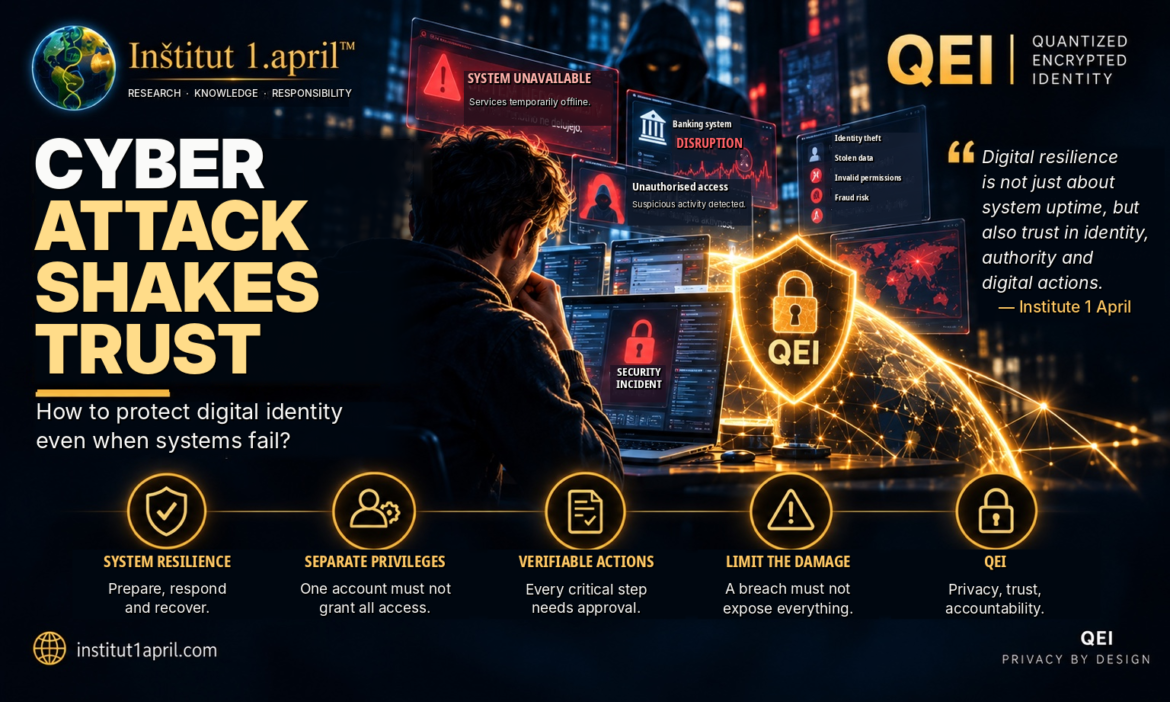
A cyberattack can interrupt essential services within moments. But the lasting harm is not confined to downtime. What happens when attackers also compromise a person’s digital identity, an administrator’s permissions or the power to approve sensitive actions? Could a different identity architecture limit the damage?
DigitalSafety
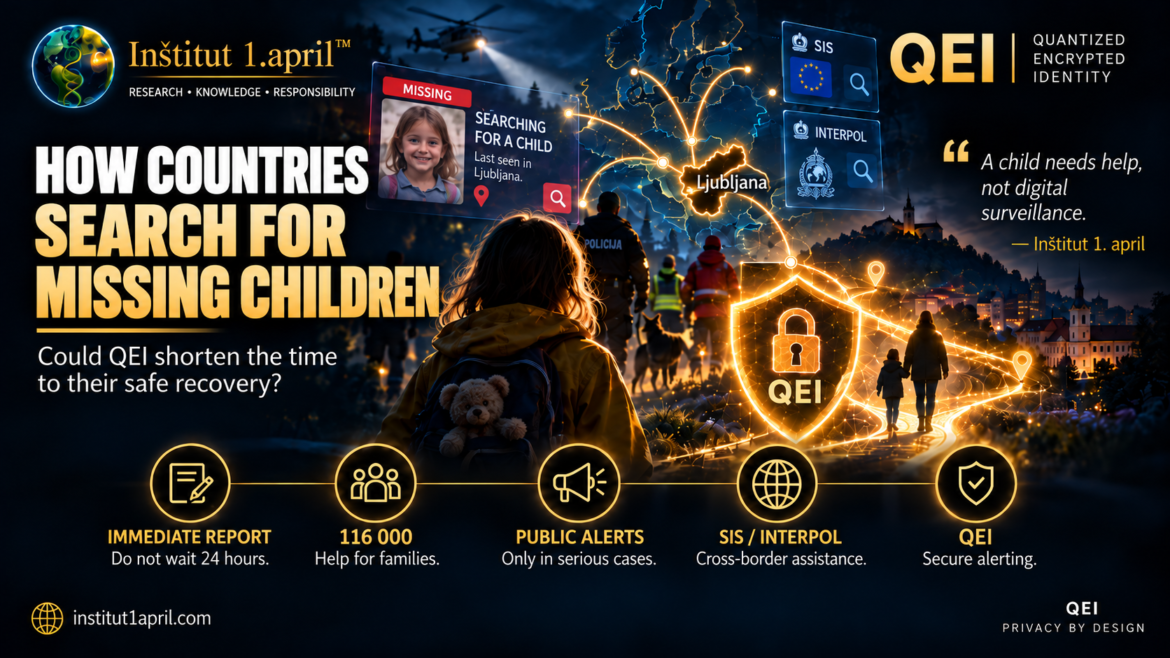
How countries search for missing children — and could QEI help bring them to safety sooner?
When a child goes missing, even a few minutes can make a difference. How do police, specialist organisations and public alert systems in Slovenia, Europe and the United States respond? And could the QEI research concept support faster, trustworthy information-sharing without turning child protection into permanent surveillance?
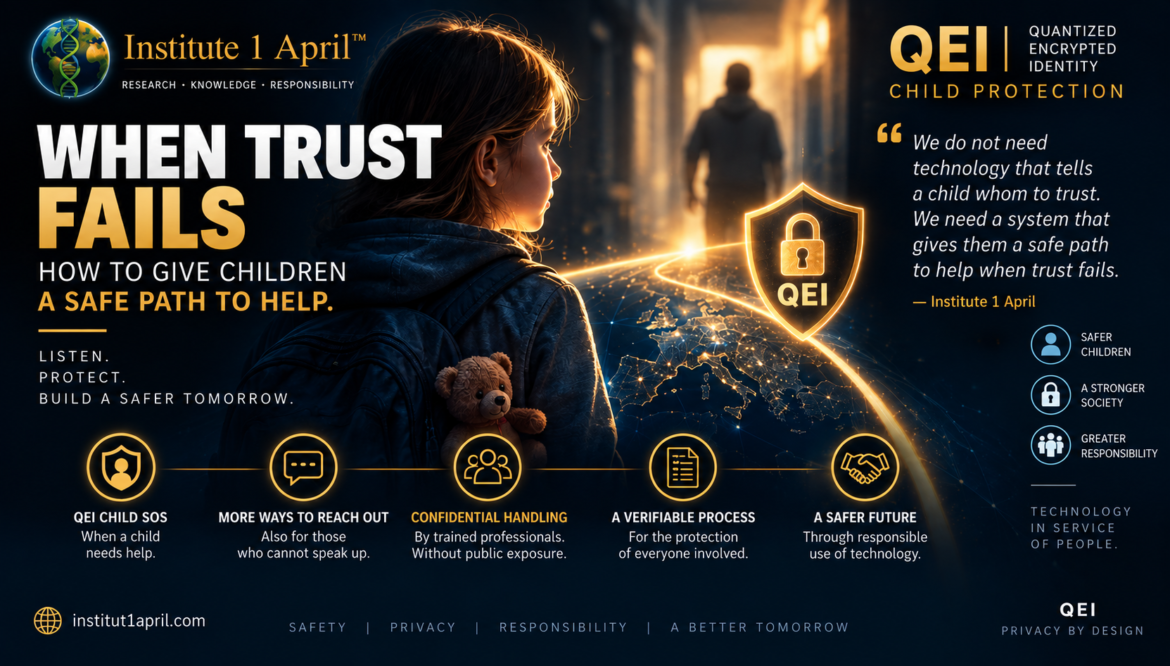
A coach, teacher, mentor, educator or another adult can play an important role in a child’s life and may hold a significant position of trust. But what happens when that very relationship of trust and authority becomes a space for pressure, fear or potential abuse? Digital identity alone cannot prevent this. But it raises an important question: can we provide children with a safe, independent and verifiable path to help that protects their rights and privacy while also protecting the rights of the person who is the subject of a report?
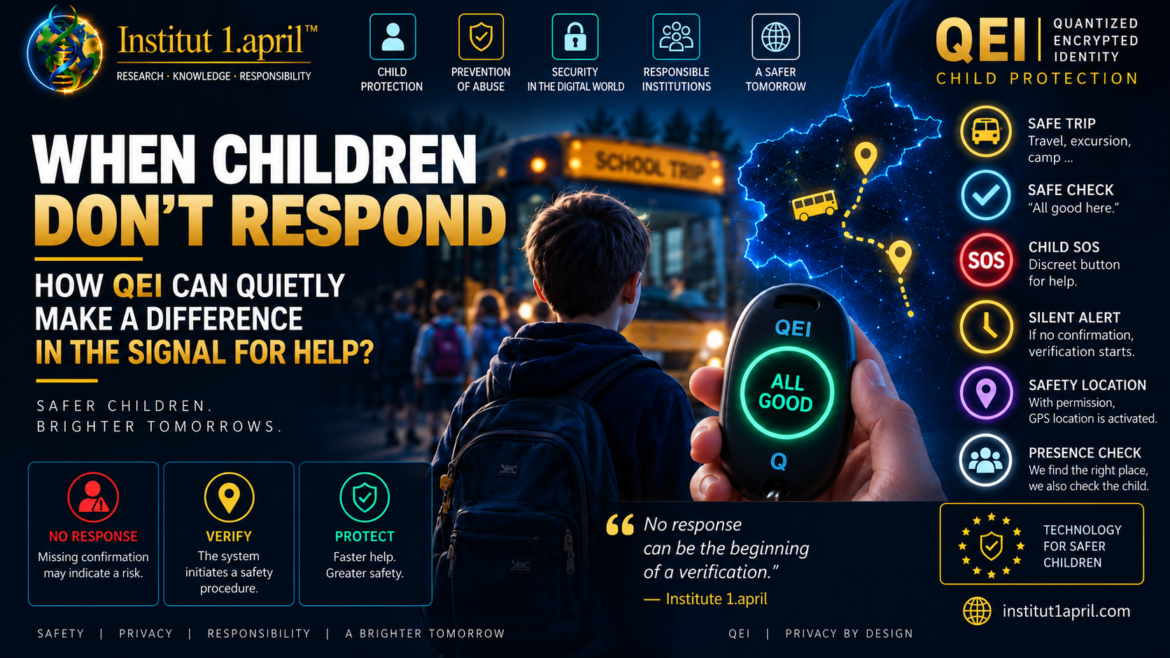
A child goes to school, on a school trip, to camp, training, or on a journey. Upon arrival, with a single press, they confirm: “I’m safe.” But what if that confirmation never comes? What if the child cannot make a call? What if someone takes away their phone or protective device? As part of the QEI – Quantized Encrypted Identity initiative at Institute 1. april, we are developing a concept in which the absence of an expected signal itself could become a reason to initiate a safety check – without the need to constantly track the child.
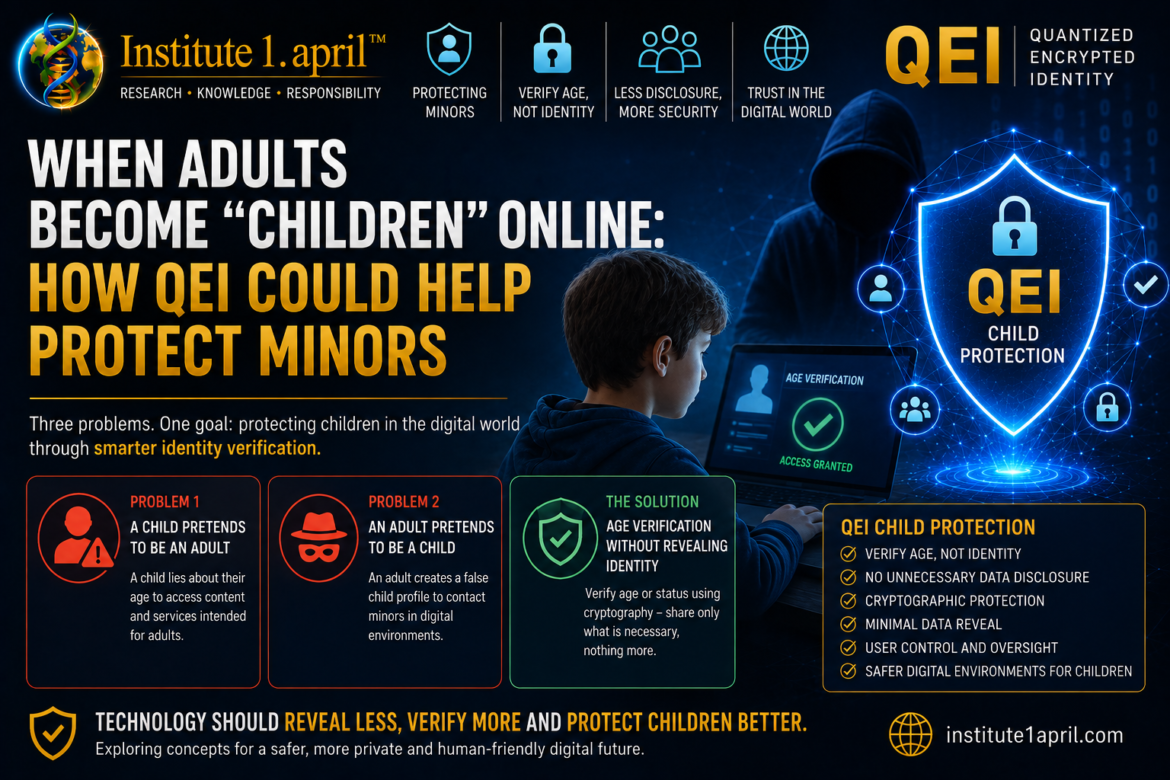
Online, an adult can become 14 years old in a matter of seconds. A child, meanwhile, can become “an adult” with a single click. At a time of increasingly intense discussions about child sexual abuse, paedophilia and online grooming, an important question arises: can the digital identity of the future protect minors more effectively without turning them into subjects of constant digital surveillance? Within the QEI – Quantized Encrypted Identity initiative at Institute 1. april, this is precisely the type of approach we are exploring.
The European Union is developing important digital projects, most notably the EU Digital Identity Wallet and the digital euro.
Digital transformation is changing the way we access public services, healthcare systems, banking, and many other essential aspects of everyday life.
Artificial intelligence is opening new doors for organised crime. Do we also need a new generation of digital identity?
The development of artificial intelligence and social media is raising new questions about child safety.
Institute 1. april opens a public survey on the future of child protection and digital identity
Public survey on the future of child protection and digital identity. We invite you to participate by completing the survey.