When a child goes missing, even a few minutes can make a difference. How do police, specialist organisations and public alert systems in Slovenia, Europe and the United States respond? And could the QEI research concept support faster, trustworthy information-sharing without turning child protection into permanent surveillance?
QEIChildProtection
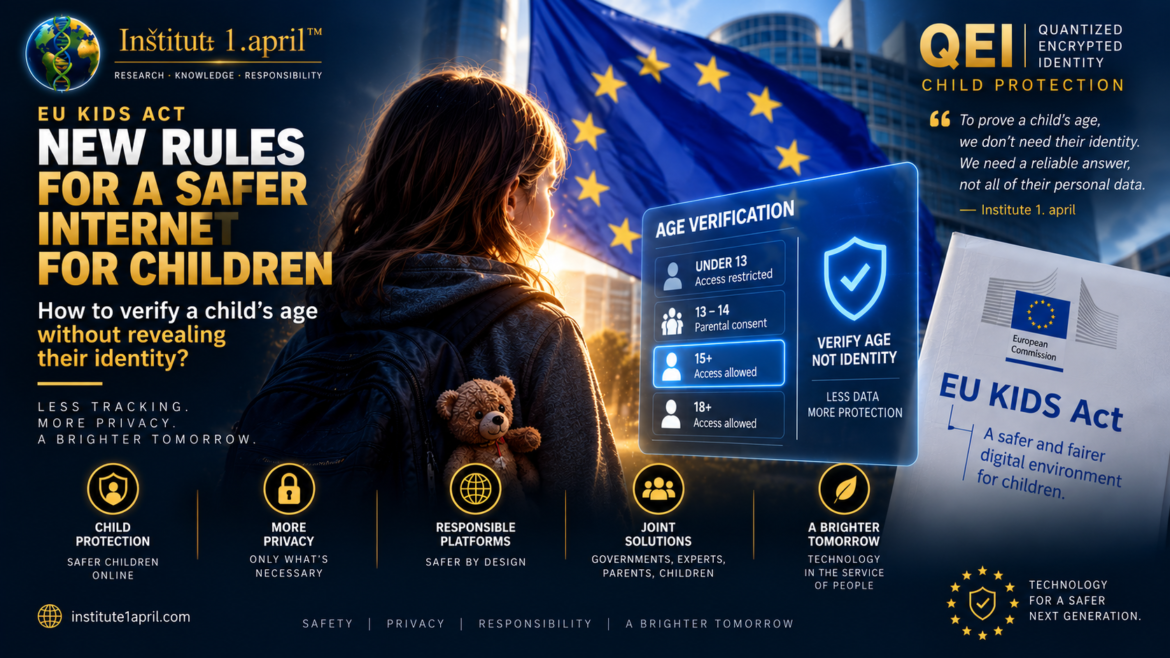
EU KIDS Act Raises a New Question: How Can We Verify a Child’s Age Without Revealing Their Identity?
On 17 September 2026, the European Commission presented the proposal for the EU KIDS Act, aimed at strengthening the protection of children and adolescents in the digital environment. Among other measures, the proposal introduces a common European approach to age restrictions and places greater responsibility on digital platforms. But alongside restricting access, an important technical and societal question emerges: how can a user’s age be reliably verified without requiring a child to disclose their identity to every online platform?
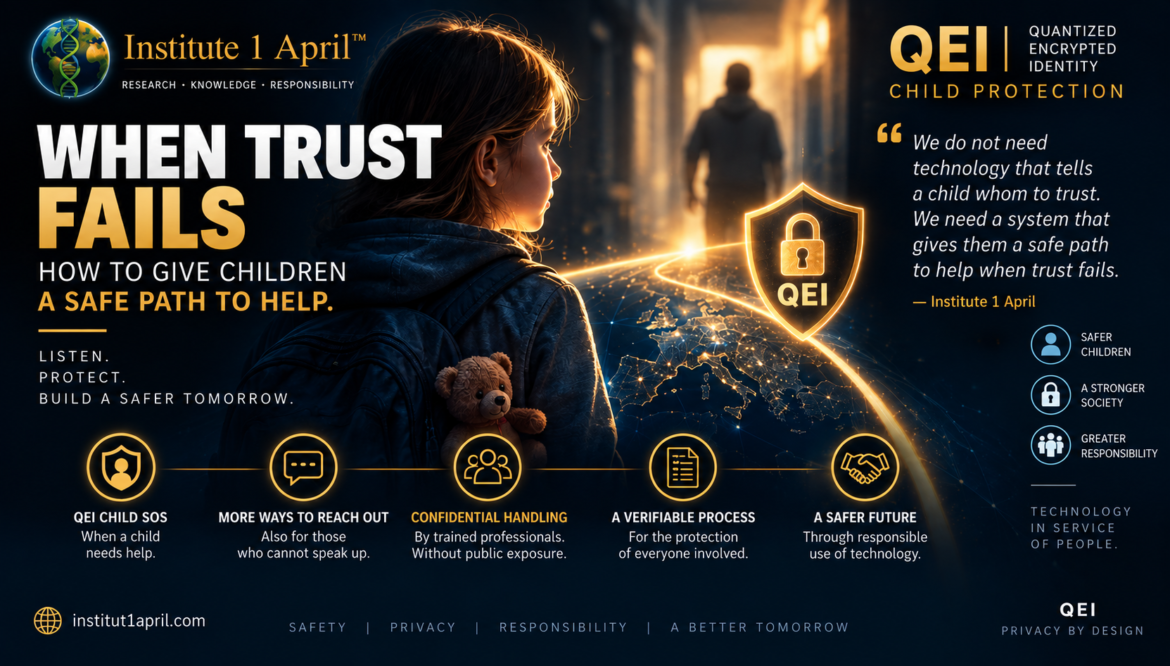
A coach, teacher, mentor, educator or another adult can play an important role in a child’s life and may hold a significant position of trust. But what happens when that very relationship of trust and authority becomes a space for pressure, fear or potential abuse? Digital identity alone cannot prevent this. But it raises an important question: can we provide children with a safe, independent and verifiable path to help that protects their rights and privacy while also protecting the rights of the person who is the subject of a report?
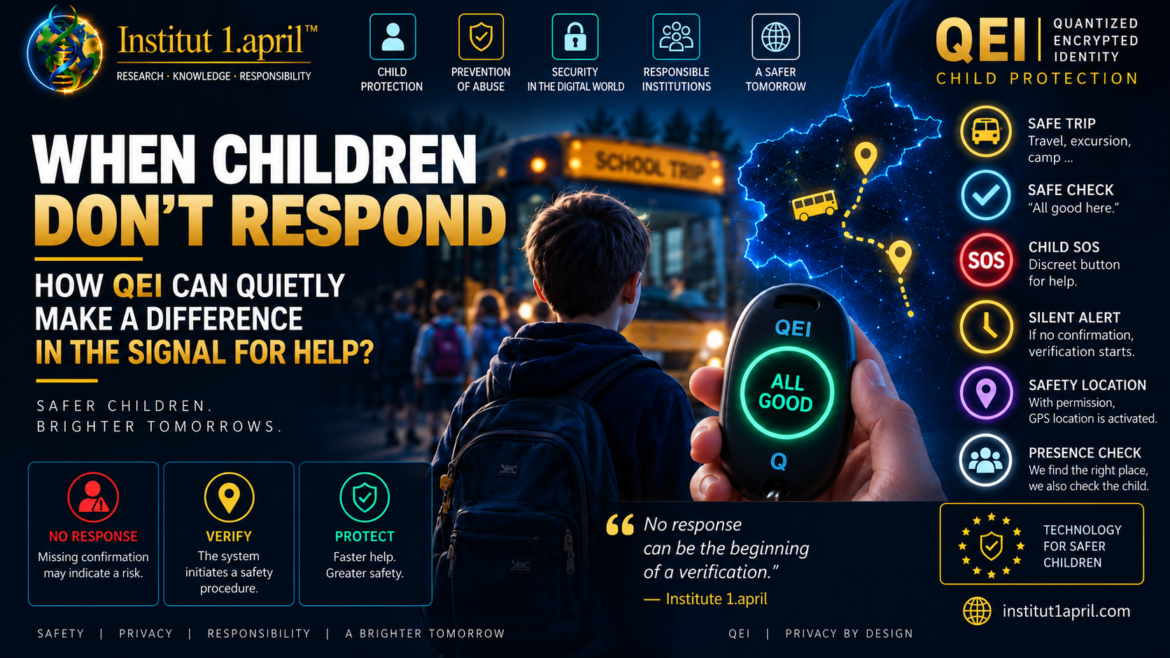
A child goes to school, on a school trip, to camp, training, or on a journey. Upon arrival, with a single press, they confirm: “I’m safe.” But what if that confirmation never comes? What if the child cannot make a call? What if someone takes away their phone or protective device? As part of the QEI – Quantized Encrypted Identity initiative at Institute 1. april, we are developing a concept in which the absence of an expected signal itself could become a reason to initiate a safety check – without the need to constantly track the child.
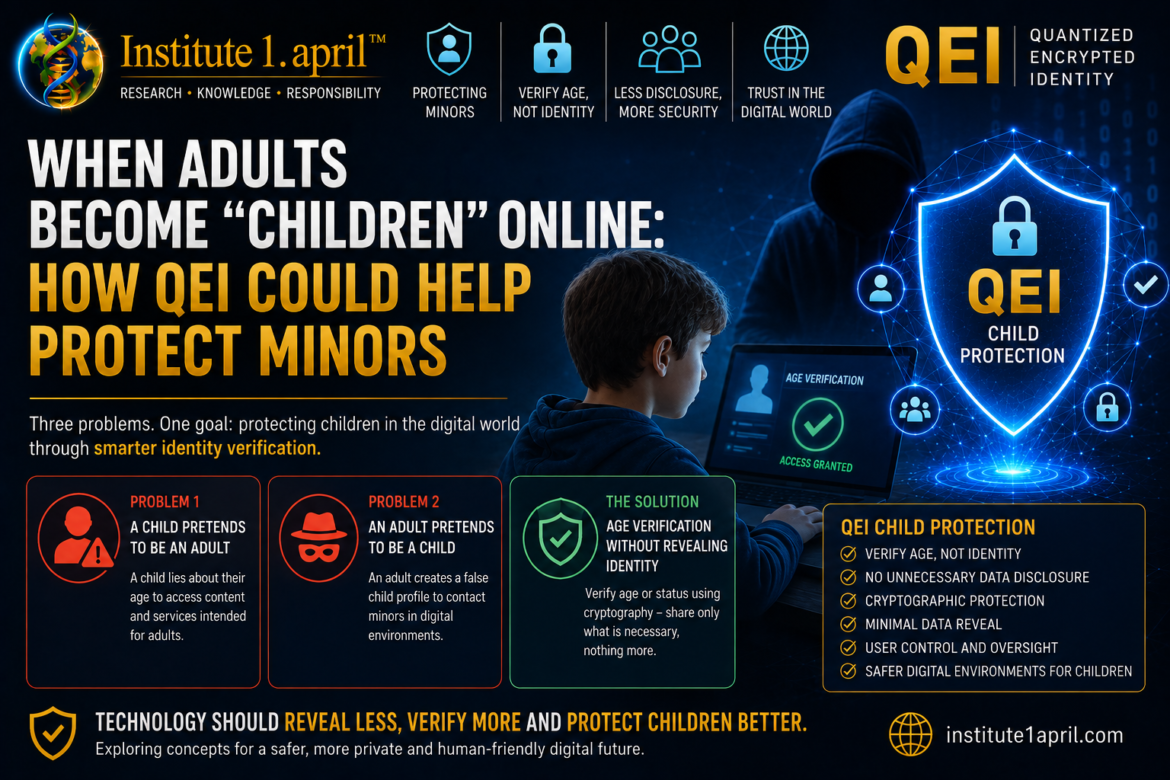
Online, an adult can become 14 years old in a matter of seconds. A child, meanwhile, can become “an adult” with a single click. At a time of increasingly intense discussions about child sexual abuse, paedophilia and online grooming, an important question arises: can the digital identity of the future protect minors more effectively without turning them into subjects of constant digital surveillance? Within the QEI – Quantized Encrypted Identity initiative at Institute 1. april, this is precisely the type of approach we are exploring.